Monitoring and alerts
Continuous supervision, fault diagnosis and automatic alerts when something goes out of range.
A pump that stops in the middle of the night, a tank running dry, an alarm nobody sees. I connect what you already have so it warns you in time, without replacing equipment that works.

What I work with
Continuous supervision, fault diagnosis and automatic alerts when something goes out of range.
I connect old machines and systems, with their own formats and protocols, without rebuilding everything.
What to measure and how often, and how to see it to make decisions, not just to store it.
I simulate a change on a model before touching the real installation.
From the idea to commissioning, coordinated with your team and suppliers.

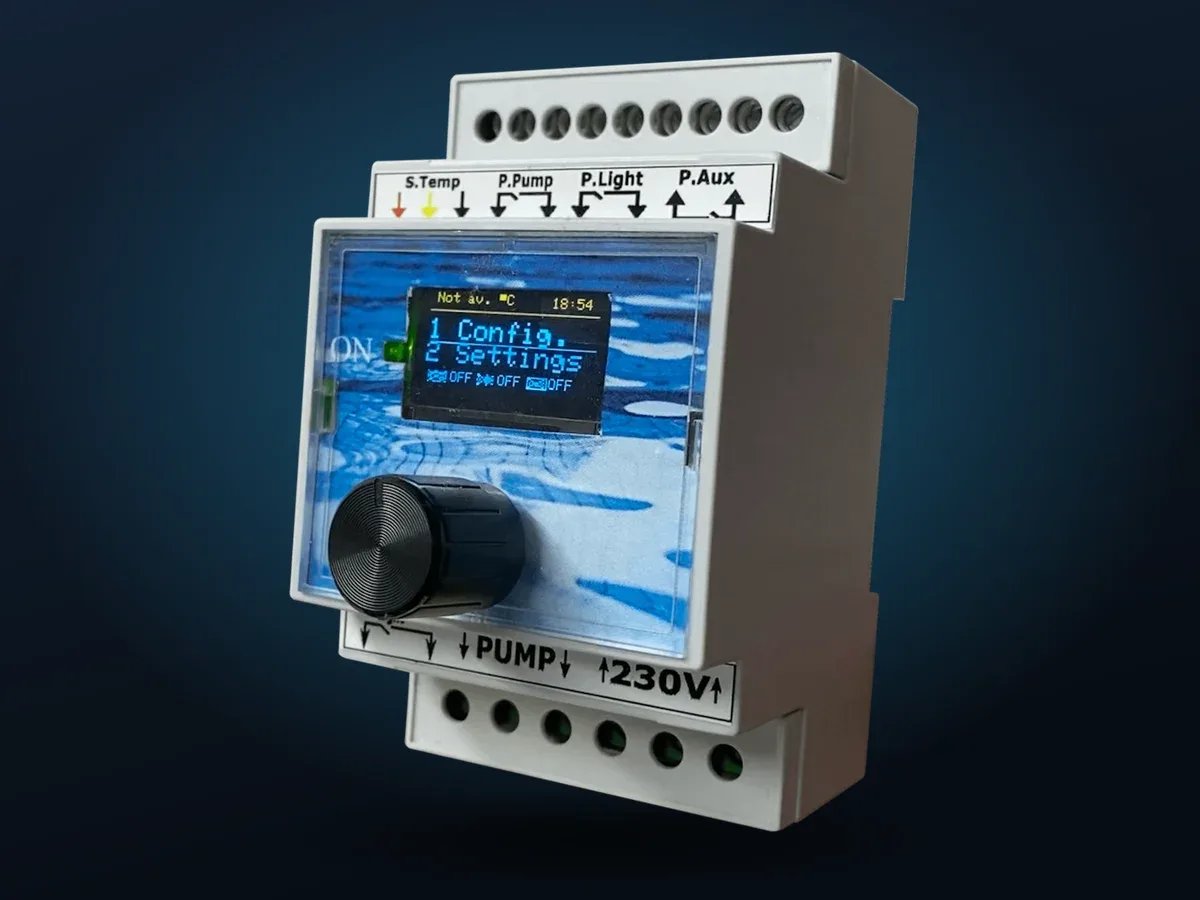
A small unit listens to the signals your machines already give, spots when something is off and raises the alarm. Locally and, if you want, on your phone too.
Four steps and no surprises: at every point you know what comes next, what you get and what it costs.

You tell me what you need, what you already have and what worries you. No commitment, no jargon.
You get: An honest view on whether it is feasible and where I would start.

In writing: what I will do, what you get, in what order and what it costs. Before starting.
You get: A fixed proposal with scope, phases and price.

You see and test partial deliveries. No black boxes opened at the end.
You get: Prototypes and versions you can hold and test.

Files, documentation and support during commissioning. And I am still around afterwards.
You get: Source files, documentation and someone to call.
Almost never. I first look at what information it already gives; often adding the connecting piece is enough.
No. If you prefer, everything stays on site and only the essentials leave.
To answer "what would happen if…" with a model before spending money or stopping production.
Tell me where you are and what worries you. You will hear back from me, not from an automated form, with how I would approach it and, if it fits, a fixed quote.
I can also help with
